
What Is A Sidechain?
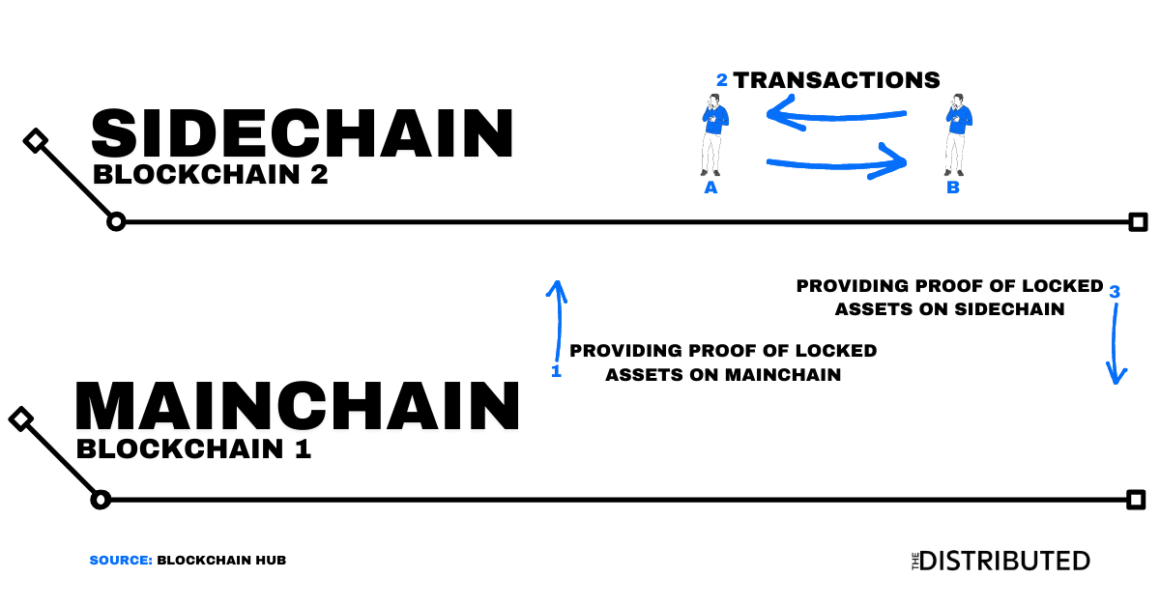
A sidechain is a blockchain that runs independent of the mainchain but is interoperable through a two-way bridge.((Ethereum – Sidechains))
A majority of sidechains exist to fix issues on the mainchain such as scalability and speed. They focus on one specific issue faced by the mainchain, rather than trying to solve a bunch of problems.
Sidechains can also be used to take a load of the mainchain by running decentralized applications (dApps), there is no limit to how many sidechains can run to the mainchain.((CryptoCom University – What are Sidechains? – Scaling Blockchain on the Side)) Although, the more sidechains, the more complex the blockchain design becomes.
Sidechains were first proposed by cypherpunk and inventor of hashcash, Dr. Adam Back in 2014 through a publishing titled “Enabling Blockchain Innovations with Pegged Sidechains“, where he described sidechains as enabling “bitcoins and other ledger assets to be transferred between multiple blockchains”
How Do Sidechains Work?
Sidechains function by having a “lockbox” on each side of the bridge. Users send their tokens to these lockboxes, where once verified that they’ve been received will release the token or an equivalent on the other side of the bridge, locking the original token. The steps are reversed if you want to switch the tokens once again.
Sidechains create their own security protocols, which usually incorporate Byzantine Fault Tolerant methods ensuring consensus is maintained,((EthHub – Sidechains)) they’re also firewalled, so a breach on one chain won’t affect the other.((Enabling Blockchain Innovations with Pegged Sidechains – Page 6))
On the other hand, some sidechains benefit from the security provided by the mainchain in a parent-child relationship such as Ardor.
Are Sidechains Layer 2 Protocols?
Sidechains, unlike Layer 2 protocols, do not relay state changes and transaction data back to the mainchain.((Ethereum – Sidechains)) Layer 2 solutions are also built on top of Layer 1s and benefit from its security, consensus, and nodes.
A sidechain is a chain created for a specific purpose whilst Layer 2 applications are a patch for existing Layer 1s faults.((CoinTelegraph – Deconstructing Sidechains — The Future Of Web3 Scalability))